
Sorry, nothing in cart.
How Ivermectin 12mg Works to Kill Parasites
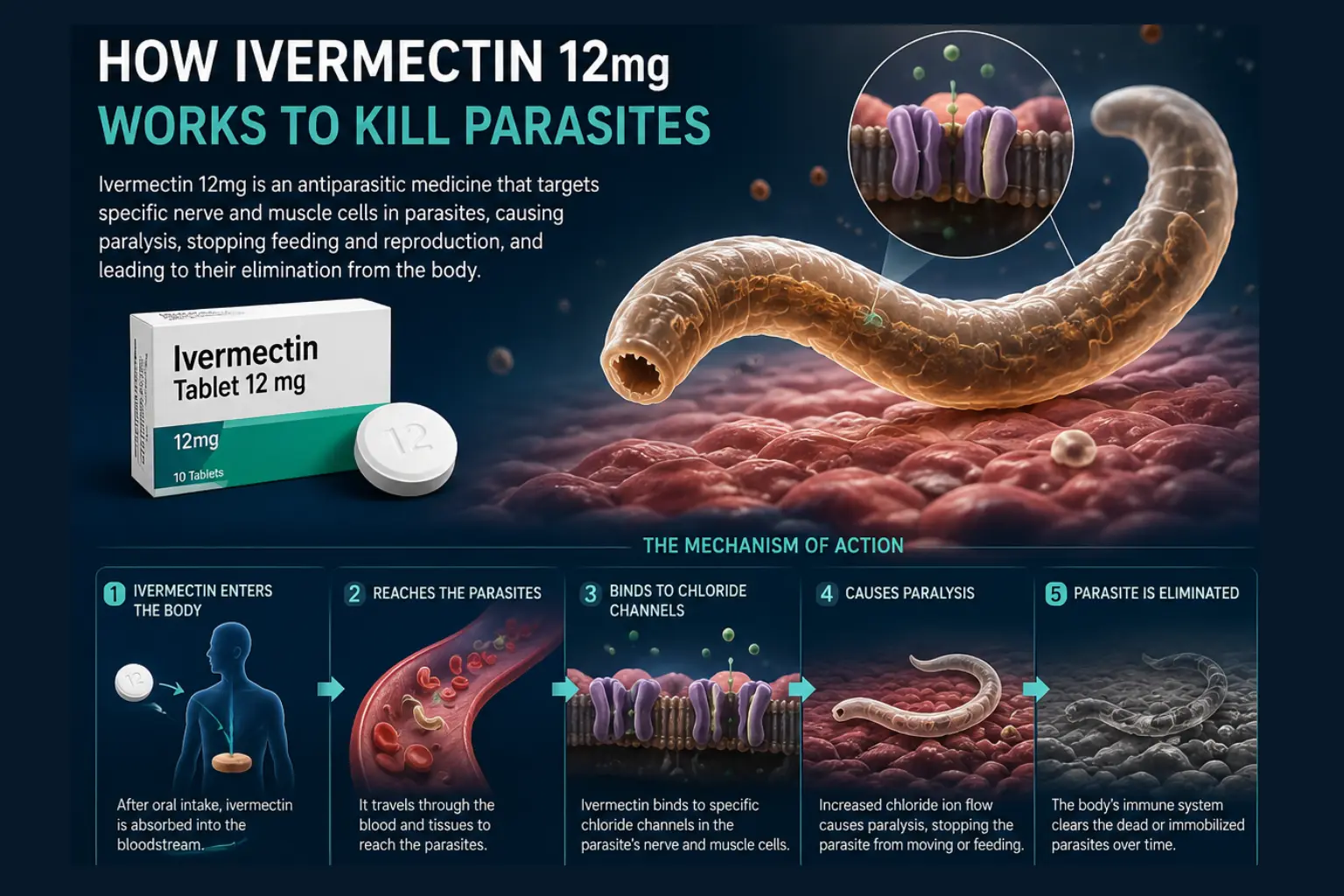
Ivermectin is an antiparasitic medication that has been used in human and veterinary medicine for decades. Since its introduction in the late 20th century, it has played an important role in treating several parasitic diseases, particularly in regions where these infections are common. Its discovery transformed the management of diseases such as onchocerciasis (river blindness) and strongyloidiasis, and it remains on the World Health Organization’s Model List of Essential Medicines for specific approved uses.
Ivermectin is available in different tablet strengths, including 12 mg, 24 mg ,40mg. The tablet strength simply indicates the amount of active ingredient in each tablet; it does not determine whether the medicine is more or less effective for a particular person. The appropriate dose depends on factors such as body weight, the infection being treated, and clinical guidance.
This article explains how ivermectin works against parasites, the types of infections it is used to treat, what happens after taking a dose, possible side effects, and important safety considerations.
Understanding Parasitic Infections
Parasites are organisms that survive by living in or on another organism, known as the host. In humans, parasites may include worms (helminths), mites, lice, or microscopic organisms. They can infect the skin, intestines, blood, or other tissues and may cause symptoms ranging from mild itching to serious illness.
Common parasitic infections treated with ivermectin include:
- Strongyloidiasis
- Onchocerciasis (river blindness)
- Certain forms of scabies (under medical supervision)
- Some other parasitic infections, depending on regional treatment guidelines
These infections can spread through contaminated soil, insect bites, or close contact with infected individuals.
What Is Ivermectin?
Ivermectin belongs to a group of medicines known as antiparasitic agents. It was developed from compounds produced by the soil bacterium Streptomyces avermitilis. Its introduction significantly improved the treatment of several neglected tropical diseases.
Unlike antibiotics, which target bacteria, ivermectin is designed to affect certain parasites. It does not kill bacteria or viruses and should not be used for viral illnesses such as influenza or COVID-19.
How Ivermectin Works
The effectiveness of ivermectin comes from its ability to interfere with the nervous and muscular systems of susceptible parasites.
Binding to Parasite Chloride Channels
Many parasites possess glutamate-gated chloride channels that regulate nerve and muscle activity. Ivermectin binds to these channels and causes them to remain open.
This allows chloride ions to flow continuously into the parasite’s cells.
Paralysis of the Parasite
The increased chloride flow prevents normal nerve signaling.
As a result, the parasite becomes unable to:
- Move
- Feed
- Attach to host tissues
- Reproduce
The parasite gradually becomes paralyzed.
Elimination by the Immune System
Once immobilized, parasites cannot survive effectively within the human body.
The immune system and normal biological processes gradually eliminate them over time. Depending on the infection, this process may take days or weeks.
Why Human Cells Are Less Affected
One reason ivermectin is generally well tolerated at prescribed doses is that the chloride channels it targets are much more common in certain parasites than in humans.
In addition, ivermectin has limited penetration into the brain because the blood-brain barrier restricts its entry under normal circumstances.
This selectivity helps explain why the medicine can affect parasites without causing similar effects in most people when used appropriately.
Which Parasites Respond to Ivermectin?
Ivermectin is active against a range of parasites, although not every parasite is susceptible.
Examples include:
- Strongyloides stercoralis
This intestinal roundworm can persist for years if untreated.
Ivermectin is considered a standard treatment in many clinical guidelines.
- Onchocerca volvulus
This parasite causes river blindness.
Ivermectin reduces the number of larvae circulating in the body and helps prevent progression of disease.
- Scabies Mites
For certain cases, particularly crusted scabies or outbreaks in institutions, oral ivermectin may be recommended alongside topical treatment under medical supervision.
- Head Lice
In selected situations, ivermectin may also be used when other treatments have failed.
What Happens After Taking a Dose?
After swallowing a tablet:
- The medicine dissolves in the stomach.
- It is absorbed through the small intestine.
- It enters the bloodstream.
- It reaches tissues where susceptible parasites are present.
- It binds to parasite nerve and muscle cells.
- The parasites become immobilized.
- The body gradually clears them.
Although ivermectin begins working soon after absorption, symptoms may take several days or longer to improve.
Why Some Conditions Require More Than One Dose
Some parasites have life cycles that make a single dose insufficient.
For example:
- Newly hatched parasites may not be affected immediately.
- Eggs may survive initial treatment.
- Reinfection may occur in certain environments.
Healthcare professionals sometimes recommend repeat treatment based on the specific infection and clinical circumstances.
Factors That Influence Effectiveness
Treatment success depends on several factors, including:
- Correct diagnosis
- Appropriate dose
- Body weight
- Type of parasite
- Severity of infection
- Following medical instructions
Not every infection responds to ivermectin, and laboratory confirmation may be needed.
Safety Considerations
Ivermectin should only be used under the guidance of a qualified healthcare professional.
People should inform their clinician if they:
- Are pregnant or planning pregnancy
- Are breastfeeding
- Have liver disease
- Have neurological disorders
- Take other medications that may interact
Medical advice is particularly important in regions where multiple parasitic infections are common.
Possible Side Effects
Most people tolerate ivermectin well, but side effects can occur.
Common side effects include:
- Dizziness
- Headache
- Nausea
- Mild diarrhea
- Fatigue
These effects are often temporary.
Some symptoms after treatment may be related to the body’s inflammatory response as parasites die rather than the medicine itself.
Serious reactions are uncommon but require prompt medical evaluation.
Misconceptions About Ivermectin
Several misconceptions exist regarding ivermectin.
Myth: It treats every parasitic infection.
Fact: It is effective only against specific susceptible parasites.
Myth: Higher doses work better.
Fact: Taking more than prescribed can increase the risk of adverse effects without improving treatment.
Myth: It works against viruses.
Fact: Ivermectin is not approved as a treatment for viral illnesses such as COVID-19, and major health authorities recommend using it only for approved or evidence-supported indications.
Preventing Parasitic Infections
Medication is only one part of prevention.
Helpful measures include:
- Washing hands regularly
- Drinking safe water
- Wearing footwear in areas with contaminated soil
- Practicing good food hygiene
- Following public health recommendations for parasite control
- Seeking medical care for persistent symptoms
Frequently Asked Questions (FAQs)
1. How does Ivermectin 12mg kill parasites?
Ivermectin works by targeting specific chloride channels in susceptible parasites, causing paralysis and preventing them from feeding or reproducing. If you’re looking for educational information, resources such as ivermectinaustralia may provide general information about ivermectin and its approved uses.
2. What parasites can Ivermectin 12mg treat?
Ivermectin is prescribed for certain parasitic infections, including strongyloidiasis and onchocerciasis, and may also be used for some cases of scabies under medical supervision. Information on buyivermectinaustralia should be reviewed alongside advice from a qualified healthcare professional.
3. How long does Ivermectin 12mg take to work?
The medication begins working after it is absorbed into the bloodstream, although symptom improvement may take several days depending on the infection and individual response.
4. Is Ivermectin effective against all parasites?
No. Ivermectin is effective only against specific parasites that are susceptible to its mechanism of action. A healthcare professional can determine whether it is appropriate for a particular infection.
5. Does Ivermectin kill parasite eggs?
Ivermectin primarily affects certain stages of parasites and may not destroy all eggs. Depending on the infection, repeat treatment may be recommended by a healthcare professional.
6. Why do some people need more than one dose?
Some parasites have complex life cycles, so additional doses may be needed to target newly developed parasites. Always follow the treatment plan provided by your healthcare professional.
7. How is the correct Ivermectin dose determined?
The correct dose depends on body weight, the type of parasitic infection, and current medical guidelines. A 12 mg tablet is one available strength and may not be appropriate for every individual.
8. Should I take Ivermectin with food?
Follow the instructions provided by your healthcare professional or the product information. Recommendations may vary depending on the condition being treated.
9. How long does Ivermectin stay in the body?
Ivermectin has an average half-life of approximately 18 hours, but small amounts can remain in the body for several days before being eliminated.
10. Is Ivermectin an antibiotic?
No. Ivermectin is an antiparasitic medicine and does not treat bacterial infections.
11. Can Ivermectin treat viral infections?
No. Ivermectin is not approved to treat viral illnesses such as influenza or COVID-19. It should only be used for approved or evidence-supported antiparasitic indications.
12. What are the common side effects of Ivermectin?
Possible side effects include headache, dizziness, nausea, diarrhea, fatigue, and mild stomach discomfort. Contact a healthcare professional if you experience severe or persistent symptoms.
13. Can children take Ivermectin 12mg?
Children may be prescribed ivermectin in certain situations, but dosing is based on body weight and should always be determined by a healthcare professional.
14. Is Ivermectin safe during pregnancy?
The safety of ivermectin during pregnancy or breastfeeding depends on individual circumstances. Consult your healthcare provider before using the medication.
15. Can I drink alcohol while taking Ivermectin?
Alcohol may increase side effects such as dizziness in some people. Discuss alcohol use with your healthcare professional while undergoing treatment.
16. Can Ivermectin interact with other medicines?
Yes. Ivermectin can interact with certain medications. Inform your healthcare provider about all prescription medicines, over-the-counter products, and supplements you are taking.
17. How can I reduce my risk of parasitic infections?
Good hygiene, drinking safe water, wearing footwear in areas with contaminated soil, practicing safe food handling, and following public health guidance can help reduce the risk of parasitic infections.
18. What should I do if I miss a dose?
If you miss a dose, follow the advice provided by your healthcare professional or the product instructions. Do not take a double dose unless instructed.
19. When should I seek medical attention after taking Ivermectin?
Seek immediate medical care if you develop severe allergic reactions, difficulty breathing, swelling of the face or throat, persistent vomiting, confusion, or other serious symptoms.
20. Where can I find reliable information about Ivermectin 12mg?
For educational information, you can review trusted healthcare resources or informational pages on ivermectinaustralia. If you are researching buyivermectinaustralia, ensure the information is consistent with guidance from qualified healthcare professionals and recognized medical authorities before making any healthcare decisions.